Missing a tooth can affect your smile, confidence, chewing ability and overall oral health. Dental implants are a popular long-term solution because they replace the missing tooth root and support a natural-looking artificial tooth. However, one of the most common questions patients ask before starting treatment is: How long does it take to get a dental implant?
The complete dental implant treatment timeline usually takes around 3 to 6 months, although some cases may take longer depending on bone quality, gum health, the need for bone grafting and the type of implant restoration. The process involves several stages, from the initial dental consultation and digital scans to implant placement, healing and final crown fitting.
At Vital Dental Clinic in Chandigarh, patients from Chandigarh, Mohali, Panchkula, Zirakpur, Kharar and nearby areas can consult an implant dentist to understand their treatment options and expected timeline.
How Long Does Dental Implant Treatment Take?
In a straightforward case with sufficient jawbone and healthy gums, dental implant treatment commonly takes approximately 3 to 6 months from implant placement to the final crown. The exact duration varies from patient to patient.
The longest stage is generally osseointegration, during which the dental implant gradually bonds with the surrounding jawbone. This healing process creates a stable foundation for the replacement tooth.
If additional procedures such as tooth extraction, bone grafting or sinus lifting are required, the overall dental implant treatment timeline may extend to 6–12 months or sometimes longer.
Complete Dental Implant Treatment Timeline: Step by Step
Understanding each stage can help you prepare for the procedure and know what to expect.
1. Initial Dental Consultation and Examination
Estimated time: 1 appointment
The first step is a detailed consultation with a dental implant specialist. During this appointment, the dentist examines your teeth, gums, bite and jawbone to determine whether you are suitable for dental implant treatment.
Your dentist may ask about your medical history, existing dental problems, medications and previous dental procedures. These details help identify factors that could influence healing and implant success.
A treatment plan is then prepared based on your oral health, the number of missing teeth and your expectations.
2. Digital X-rays, CBCT Scan and Treatment Planning
Estimated time: 1–2 appointments
Before dental implant surgery, your dentist needs to evaluate the amount and quality of available jawbone. Digital dental X-rays or a CBCT scan may be recommended to examine the implant site in three dimensions.
A CBCT scan can help assess:
- Jawbone height and width
- Bone density and available support
- Position of nerves and nearby anatomical structures
- Location of the maxillary sinus
- Suitable implant position and angle
Digital treatment planning helps the dentist select an appropriate implant size and plan its placement. In selected cases, computer-guided implant surgery may also be considered.
For patients searching for advanced dental implant treatment in Chandigarh, proper diagnosis and planning are important steps towards a predictable treatment process.
3. Tooth Extraction or Preparatory Dental Treatment
Estimated time: Same day to several weeks or months
If the damaged tooth is still present and cannot be saved, extraction may be necessary before implant placement.
In some suitable cases, a dental implant can be placed immediately after tooth extraction. This is known as immediate implant placement. However, immediate placement is not appropriate for everyone.
If there is infection, insufficient bone or significant damage around the tooth, the dentist may recommend allowing the area to heal before placing the implant.
Patients with gum disease may also need periodontal treatment before implant surgery. Healthy gums and adequate bone support are important for long-term implant stability.
4. Bone Grafting or Sinus Lift (If Required)
Estimated time: Several months, depending on the procedure
Some patients do not have enough jawbone to support a dental implant. This can happen when a tooth has been missing for a long time, following advanced gum disease or after certain dental infections.
In such cases, a bone graft may be recommended to rebuild the area and provide better support for the implant.
For some upper-jaw implant cases, particularly in the back teeth region, a sinus lift may be needed to create sufficient bone height.
The healing time after bone grafting varies according to the size and complexity of the graft. In certain cases, grafting can be performed at the same time as implant placement; in others, the dentist may recommend waiting for the graft to heal first.
This additional stage can increase the total dental implant treatment duration.
5. Dental Implant Placement Surgery
Estimated time: Usually around 1–2 hours, depending on complexity
Once the treatment site is ready, the dental implant is placed into the jawbone through a minor surgical procedure.
The procedure is generally performed under local anaesthesia, so patients should not feel pain during the surgery.
The dentist makes an opening in the gum, prepares the implant site in the jawbone and carefully places the implant. The gum may then be closed with stitches, depending on the surgical technique.
The duration depends on several factors, including:
- Number of dental implants being placed
- Location of the missing tooth
- Bone condition
- Need for additional procedures
- Complexity of the surgical case
After implant placement, your dentist provides instructions for medication, oral hygiene, diet and follow-up appointments.
6. Initial Healing After Dental Implant Surgery
Estimated time: Approximately 1–2 weeks
After surgery, the gums begin to heal around the implant site. Mild swelling, tenderness, bruising or discomfort may occur during the first few days.
These symptoms generally improve gradually. The dentist may recommend a soft diet, appropriate medication and careful cleaning around the surgical area.
During this stage, patients should avoid disturbing the implant site and follow the dentist’s instructions carefully.
It is important to understand that the gums may heal within a couple of weeks, but the implant still needs more time to bond with the jawbone.
7. Osseointegration: The Most Important Healing Stage
Estimated time: Commonly 2–6 months
Osseointegration is the biological process in which the surrounding jawbone grows and bonds with the dental implant surface.
This stage provides the stability needed to support the final artificial tooth. It is one of the most important parts of the dental implant treatment timeline.
During this period, your dentist may schedule follow-up visits to assess healing and check implant stability.
The time required for osseointegration depends on:
- Bone quality and quantity
- Upper or lower jaw implant location
- Overall oral health
- Whether bone grafting was performed
- Smoking and other lifestyle factors
- Individual healing response
Rushing this stage can compromise treatment, so the final crown should be fitted only when the dentist confirms that the implant is sufficiently stable.
8. Abutment Placement and Gum Healing
Estimated time: Around 1–2 weeks or as advised
Once the implant has integrated with the jawbone, the next stage is connecting the abutment.
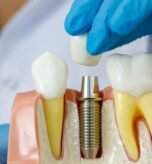
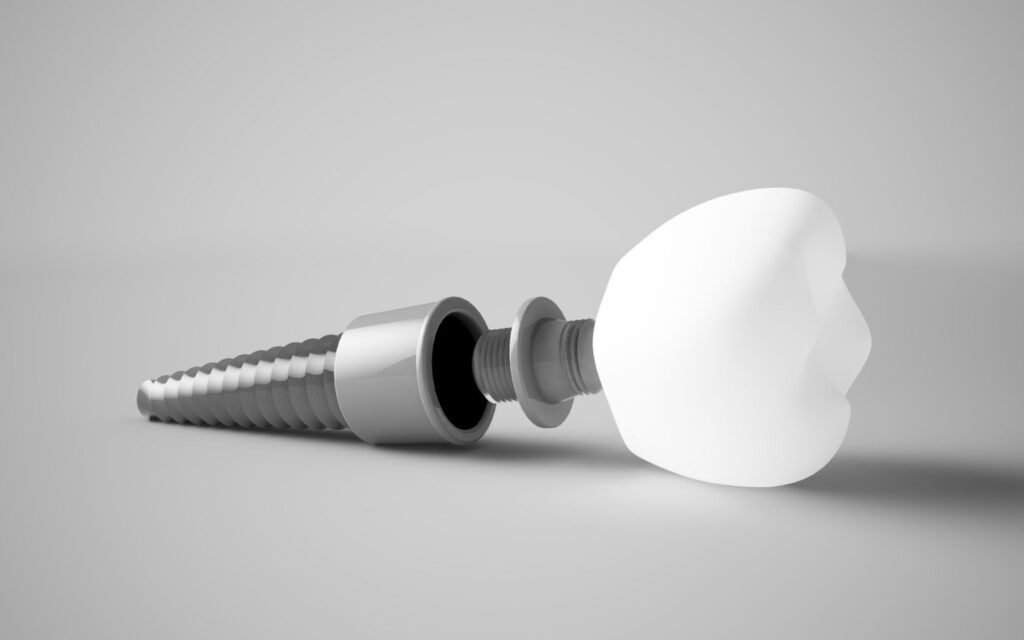
An abutment is a small connector that joins the implant to the final dental crown.
Depending on the surgical technique, the abutment may already have been placed during implant surgery. In other cases, a minor procedure may be required to expose the implant and attach the connector.
The gum tissue is then allowed to heal and form a suitable shape around the abutment.
9. Dental Impression or Digital Scan for the Final Crown
Estimated time: 1 appointment
After the implant and surrounding gum tissue are ready, your dentist records the shape and position of the implant.
This may be done using a traditional dental impression or a digital intraoral scan.
The information is used to design a custom dental crown that matches the colour, shape and size of your natural teeth.
Your dentist also checks your bite to help ensure that the new crown fits comfortably.
10. Final Dental Crown Placement
Estimated time: Usually a few weeks after records are taken
The final stage is fitting the permanent crown onto the implant abutment.
The dentist checks its fit, appearance, bite and comfort before securing it in place. Once the restoration is complete, the missing tooth has been replaced with an implant-supported artificial tooth.
Patients can gradually return to normal chewing according to their dentist’s instructions.
The final result is designed to look natural and function comfortably as part of your smile.
Dental Implant Treatment Timeline at a Glance
| Treatment stage | Approximate duration |
|---|---|
| Consultation and examination | 1 appointment |
| X-rays and CBCT scan | 1–2 appointments |
| Tooth extraction, if needed | Same day or separate visit |
| Bone grafting, if required | Several months of healing |
| Implant placement surgery | Around 1–2 hours |
| Initial gum healing | 1–2 weeks |
| Osseointegration | Commonly 2–6 months |
| Abutment and gum healing | Around 1–2 weeks |
| Final crown preparation and fitting | A few weeks |
These are general estimates, not a guaranteed schedule. Your dentist will provide an individual treatment timeline after examining your teeth and jawbone.
Can You Get Dental Implants in One Day?
Yes, certain patients may be suitable for immediate implant placement or immediate loading.
With immediate implant placement, the implant is inserted soon after the damaged tooth is extracted. With immediate loading, a temporary tooth or restoration may be attached soon after implant placement.
However, these are different treatment approaches, and receiving a temporary tooth on the same day does not necessarily mean the implant has completed healing.
Same-day dental implants may be possible when the patient has:
- Sufficient jawbone support
- Good primary implant stability
- Healthy surrounding gum tissue
- Suitable bite conditions
- No significant active infection at the implant site
The dentist must carefully evaluate the case before recommending immediate treatment. The permanent crown may still need to wait until adequate healing and osseointegration have taken place.
Factors That Affect How Long Dental Implants Take
Every patient has a different dental condition. Several factors can influence the time required to complete dental implant treatment.
Bone Quality and Quantity
Patients with healthy, sufficient jawbone may be able to proceed directly to implant placement. Those with bone loss may need bone grafting, which can extend the treatment timeline.
Gum Health
Gum infections and periodontal disease should be managed before or during the implant treatment process, depending on the clinical situation.
Number of Missing Teeth
Replacing a single missing tooth may involve fewer treatment steps than replacing several teeth or planning full-mouth dental implants.
Smoking and Lifestyle Habits
Smoking can interfere with healing and increase the risk of implant complications. Your dentist may advise stopping smoking before and after surgery.
General Health and Healing
Medical conditions, medications and individual healing responses can influence treatment planning. Always share your complete medical history with your dentist.
How Can You Make Dental Implant Healing Easier?
Following post-operative instructions can support recovery and help protect the implant site.
- Follow your dentist’s medication instructions.
- Eat soft foods during the initial healing period.
- Avoid chewing hard foods directly over the surgical site.
- Maintain oral hygiene as advised by your dentist.
- Avoid smoking and tobacco products.
- Attend scheduled follow-up appointments.
- Avoid strenuous physical activity for the period recommended after surgery.
- Contact your dentist if you experience increasing pain, swelling, fever or other unusual symptoms.
Good oral hygiene remains important even after the final crown is fitted. Dental implants need regular professional monitoring and daily cleaning to help protect the surrounding gums and bone.
Dental Implant Treatment in Chandigarh at Vital Dental Clinic
If you are looking for dental implants in Chandigarh, choosing a clinic that provides proper diagnosis, treatment planning and follow-up care is an important part of your decision.
At Vital Dental Clinic, Chandigarh, patients can consult an implant dentist to discuss tooth replacement options and understand the different stages of dental implant treatment.
The clinic’s implant treatment planning may include:
- Detailed dental examination
- Digital imaging and assessment where indicated
- Evaluation of jawbone and gum health
- Single tooth and multiple tooth implant options
- Full-mouth dental implant treatment planning
- Implant-supported crowns and restorations
- Post-treatment care and follow-up guidance
Patients from Sector 15, Sector 17, Sector 22, Sector 34, Mohali, Panchkula, Zirakpur, Kharar and other nearby Tricity areas can enquire about dental implant consultation at Vital Dental Clinic.
The right treatment plan depends on your individual dental condition. A consultation can help you understand the expected duration, available options and estimated treatment cost.
Frequently Asked Questions About Dental Implant Treatment Time
1. How many months does a dental implant take from start to finish?
A straightforward dental implant case commonly takes around 3–6 months after implant placement. Additional procedures such as bone grafting or sinus lifting may extend the timeline.
2. How long does dental implant surgery take?
Placing a single dental implant often takes around 1–2 hours, although the duration depends on the complexity of the case and the number of implants.
3. How long does a dental implant take to heal?
Initial gum healing generally takes around 1–2 weeks. Complete bonding between the implant and jawbone commonly takes 2–6 months, depending on individual factors.
4. Can I get a tooth on the same day as my dental implant?
Some suitable patients can receive a temporary tooth or restoration on the day of implant placement. However, immediate treatment is not appropriate for everyone, and the permanent restoration may be fitted later.
5. Is bone grafting always necessary for dental implants?
No. Bone grafting is only recommended when the available jawbone is insufficient for safe and stable implant placement.
6. How long after tooth extraction can I get a dental implant?
In selected cases, an implant can be placed immediately after extraction. Other patients may need to wait several weeks or months to allow the extraction site to heal.
7. Does the upper jaw take longer to heal than the lower jaw?
Healing time can vary according to bone quality, implant location and individual conditions. The upper jaw may have softer bone in some areas, which can influence the dentist’s recommended healing period.
8. Can I work the day after dental implant surgery?
Many patients can return to routine activities within a day or two, depending on the extent of surgery and their recovery. Your dentist may recommend additional rest after more complex procedures.
9. How long does a dental implant crown take to make?
Once the implant is ready for restoration, the impression or digital scan is taken and the crown is fabricated. This commonly takes a few weeks, depending on the laboratory process and case complexity.
10. Where can I get dental implants in Chandigarh?
You can consult Vital Dental Clinic in Chandigarh to discuss dental implant treatment, evaluate your oral health and understand your expected treatment timeline.