Are you thinking about replacing a missing tooth but worried that dental implant surgery might be painful? You are not alone. Many patients delay treatment because they are concerned about pain during surgery, swelling afterward, or how long recovery will take. The good news is that dental implant placement is usually performed under local anaesthesia, which helps keep the procedure comfortable.
If you are searching for dental implants in Chandigarh and want to understand whether dental implant treatment hurts, this guide explains the procedure, pain management, healing time, recovery tips, and factors that affect your experience.
At Vital Dental Clinic, Chandigarh, patients can discuss their tooth replacement options and understand what to expect before, during, and after dental implant treatment. Whether you are visiting from Chandigarh, Mohali, Panchkula, Zirakpur, Kharar, Dera Bassi, or New Chandigarh, knowing the treatment process can help you make an informed decision.
Are Dental Implants Painful?
For most patients, dental implant placement is not painful during the procedure because the dentist uses local anaesthesia to numb the treatment area. You may notice pressure, vibration, or movement, but you should not feel sharp pain. If you experience pain during treatment, tell your dentist so they can assess the area and provide additional anaesthesia if needed.
After the anaesthesia wears off, some discomfort, swelling, bruising, or tenderness is normal. These symptoms are usually most noticeable during the first few days and then gradually improve.
The amount of discomfort varies depending on several factors, including:
- The number of implants being placed.
- Whether a tooth extraction is needed.
- The amount of surgery required.
- Whether bone grafting or another additional procedure is performed.
- Your individual healing response and general health.
A straightforward single-tooth implant may involve less postoperative discomfort than a complex procedure involving multiple implants or full-mouth rehabilitation.
What Does Dental Implant Surgery Feel Like?
Understanding the sensations involved can help reduce anxiety before treatment.
During the Procedure
Your dentist will usually administer local anaesthesia before placing the implant. Once the area is numb, you should not feel sharp pain during the surgical steps.
You may notice pressure, mild vibrations, sounds from dental instruments, or the sensation of the dentist working around the tooth and jawbone. These sensations are different from pain.
If you feel uncomfortable or anxious, communicate with your dental team. They can pause when appropriate, check the anaesthesia, and explain what is happening.
After the Procedure
When the numbness wears off, the treated area may feel sore or tender. Some patients describe the discomfort as similar to that experienced after a tooth extraction.
Mild swelling and bruising can occur, especially after more extensive surgery. Your dentist may recommend suitable pain-relief medication and provide instructions for managing the initial recovery period.
Dental Implant Procedure: Step-by-Step Guide
Dental implant treatment involves several stages. The exact process depends on your oral health, the location of the missing tooth, and the restoration planned.
Step 1: Consultation and Dental Examination
The first step is a detailed dental examination. Your dentist assesses the gums, jawbone, bite, and condition of neighbouring teeth. Your medical history and medications are also reviewed.
Dental X-rays or a cone-beam computed tomography (CBCT) scan may be recommended to evaluate the available bone and important anatomical structures.
If you are considering dental implants in Chandigarh, this consultation helps determine whether implant treatment is suitable and whether additional procedures may be needed.
Step 2: Treatment Planning
The dentist develops a treatment plan based on the examination and imaging findings. This includes deciding where the implant should be placed, what type of restoration will be used, and how long treatment may take.
If a damaged tooth needs to be removed, the dentist will explain whether implant placement can be considered at the same appointment or whether a healing period is advisable.
Step 3: Local Anaesthesia
Before surgery, local anaesthesia is administered to numb the treatment area. This helps minimise pain during implant placement.
Patients with significant dental anxiety can discuss their concerns beforehand. Depending on the clinical setting and individual needs, additional anxiety-management options may be available.
Step 4: Dental Implant Placement
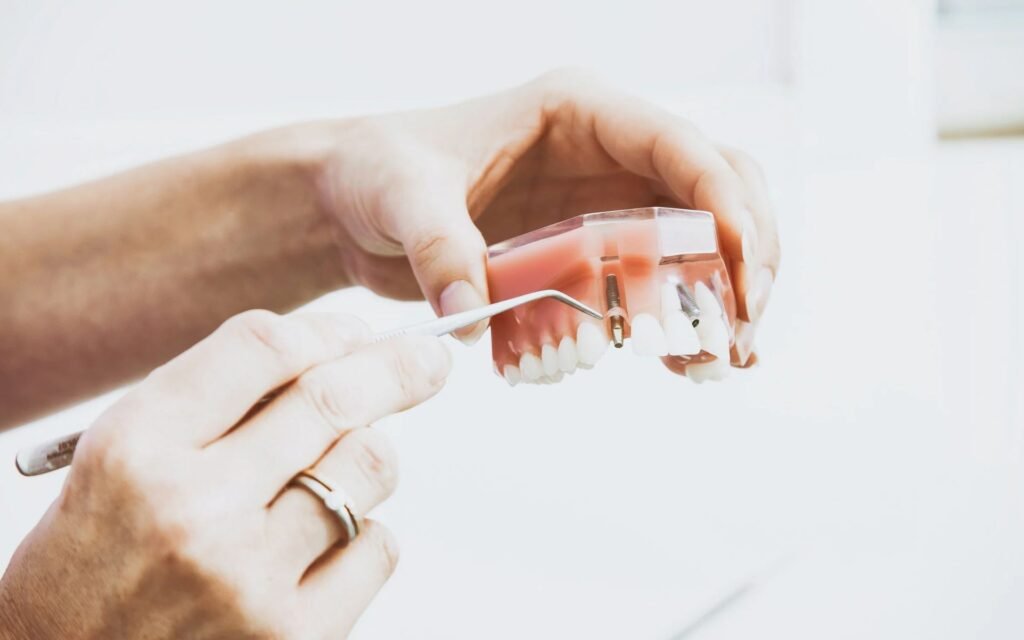
The dentist prepares the site and places the implant into the jawbone. The procedure’s duration depends on the complexity of the case and the number of implants being placed.
After placement, the area may be closed with stitches when needed. In selected cases, a temporary tooth or restoration may be provided, but immediate restoration is not suitable for everyone.
Step 5: Healing and Osseointegration
Following surgery, the implant needs time to integrate with the surrounding bone. This process is known as osseointegration.
Healing commonly takes several months, although the exact timeline depends on the implant site, bone quality, overall health, and whether bone grafting was performed.
Step 6: Placement of the Final Tooth
Once the dentist confirms that healing and implant stability are satisfactory, the final crown, bridge, or other planned restoration can be fitted.
For more information about available treatment options, visit Vital Dental Clinic’s Dental Implants in Chandigarh page.
How Much Pain Should You Expect After Dental Implant Surgery?
Postoperative discomfort is common, but its severity varies from patient to patient.
First 24 Hours
The surgical area may become sore as the anaesthesia wears off. Mild bleeding or oozing can occur, and some swelling may begin.
Follow your dentist’s instructions regarding rest, prescribed medication, food, and oral hygiene. Avoid disturbing the surgical site.
Days 2–3
Swelling and tenderness may become more noticeable during the first few days. This does not necessarily mean something is wrong, provided the symptoms remain within the expected range and begin to improve.
Use cold compresses if your dentist recommends them, and eat soft foods that do not irritate the area.
Days 4–7
Many patients notice gradual improvement in pain and swelling during this period. The gums continue healing, although tenderness may remain.
Continue following your aftercare instructions and attend any scheduled review appointment.
After One to Two Weeks
The initial soft-tissue healing is often substantially improved by this stage, depending on the procedure. However, the implant is still integrating with the bone, so feeling better does not mean the implant is ready for unrestricted chewing.
Your dentist will advise when normal activities and food choices can be resumed.
How Long Does Dental Implant Recovery Take?
Dental implant recovery has two different aspects: the healing of the gums and the integration of the implant with the jawbone.
| Recovery stage | What to expect |
|---|---|
| First 24–72 hours | Soreness and swelling may be most noticeable |
| First week | Symptoms should generally begin improving |
| One to two weeks | Gum healing often progresses substantially |
| Several months | Bone integration continues before final restoration, when required |
These are general guidelines, not a guaranteed timeline. Recovery can take longer if you have multiple implants, a bone graft, a complicated extraction, or certain health conditions.
Some patients can receive a temporary tooth soon after implant placement. However, temporary teeth may need to be kept out of heavy biting contact while the implant heals. Your dentist will determine the appropriate approach.
Tips to Reduce Pain After Dental Implant Treatment
Following the correct aftercare routine can help you recover more comfortably and reduce the risk of complications.
1. Take Medication as Directed
Use pain-relief medication according to your dentist’s instructions. Do not exceed recommended doses or take someone else’s prescription. If you have allergies, medical conditions, or take other medications, tell your dentist before starting treatment.
2. Eat Soft Foods
Choose foods that require minimal chewing during the initial recovery period. Suitable options may include yoghurt, mashed potatoes, soft scrambled eggs, porridge, and lukewarm soups.
Avoid very hot foods while the area is numb, and do not chew directly over the surgical site unless your dentist says it is safe.
3. Use Cold Compresses When Recommended
A cold compress applied externally may help reduce swelling during the early recovery period. Follow your dentist’s instructions about timing and duration.
4. Keep the Area Clean
Good oral hygiene is essential, but the surgical area must be handled carefully. Brush the other teeth gently and follow your dentist’s instructions for cleaning around the implant. Do not rinse forcefully or disturb the wound if you have been told to avoid it.
5. Avoid Smoking
Smoking can impair healing and increase the risk of implant complications. Avoid smoking during recovery and discuss a longer-term cessation plan with your dental team.
6. Rest and Avoid Strenuous Exercise Initially
Give yourself time to recover after surgery. Follow your dentist’s guidance on when to resume heavy lifting, strenuous exercise, or other activities that could aggravate bleeding or swelling.
7. Attend Follow-Up Appointments
Your dentist may need to check the surgical site, monitor healing, and remove stitches if necessary. Do not skip these appointments simply because the discomfort has improved.
When Is Dental Implant Pain a Warning Sign?
Some discomfort is expected after implant surgery, but severe or worsening symptoms should not be ignored.
Contact your dentist promptly if you experience:
- Pain that increases rather than gradually improves.
- Swelling that continues to worsen or returns after improving.
- Persistent bleeding.
- Fever, pus, or an unpleasant taste associated with the surgical site.
- A loose implant or temporary restoration.
- New or persistent numbness after the expected anaesthetic period.
Seek urgent medical care if you develop difficulty breathing or swallowing or rapidly spreading swelling.
Early assessment helps your dental team identify the cause and decide whether additional treatment is required.
Are Dental Implants More Painful Than Tooth Extraction?
Dental implant placement and tooth extraction involve different surgical steps, so the discomfort cannot be compared in exactly the same way for everyone.
Both procedures are generally performed under local anaesthesia. A simple extraction may be less involved than implant surgery, while a difficult extraction can require substantial surgical work.
Implant treatment may involve preparing the jawbone and placing a fixture, whereas an extraction involves removing the tooth. If an implant is placed immediately after extraction, the overall procedure may combine both steps.
Your dentist can explain the likely recovery experience based on the complexity of your individual case.
Are Full Mouth Dental Implants More Painful Than a Single Implant?
Full mouth dental implant treatment can involve more extensive surgery than replacing a single tooth. As a result, swelling, bruising, and recovery needs may be greater, particularly when multiple teeth are extracted or bone grafting is required.
However, the level of discomfort depends on the treatment design and the individual patient. Some full-arch cases are carefully planned to reduce the number of surgical appointments, while others require a staged approach.
Patients considering full mouth dental implants in Chandigarh should ask about the expected postoperative discomfort, temporary teeth, dietary restrictions, healing period, and follow-up schedule before beginning treatment.
Who Is a Suitable Candidate for Dental Implants?
Dental implants may be appropriate for adults who have lost one or more teeth and want a stable replacement. Suitability depends on the condition of the jawbone and gums, general health, medications, and ability to maintain oral hygiene.
Your dentist may need to address gum disease, tooth decay, or other oral health problems before implant placement.
Certain conditions and habits can affect healing, including uncontrolled diabetes and smoking. These do not automatically rule out implant treatment, but they may require additional assessment or risk management.
If there is insufficient bone, a bone graft or alternative treatment plan may be considered.
Is Dental Implant Treatment Worth It?
For suitable patients, dental implants can provide a stable replacement for missing teeth and support comfortable chewing and a natural-looking smile. They may also help reduce the bone changes associated with tooth loss, although they cannot prevent all bone loss.
Implants require surgery, time for healing, and ongoing maintenance. The final crown or bridge may need repair or replacement over time, and complications can occur.
When deciding whether dental implants are right for you, consider the expected benefits, treatment time, total cost, possible risks, and alternatives such as dental bridges or dentures.
Patients from Chandigarh, Mohali, Panchkula, Zirakpur, Kharar, and Dera Bassi can discuss these options with a dentist before making a decision.
Dental Implant Treatment at Vital Dental Clinic, Chandigarh
If fear of pain has stopped you from replacing a missing tooth, a consultation can help you understand what the procedure involves and how discomfort is managed.
At Vital Dental Clinic, Chandigarh, patients can discuss dental implant suitability, treatment planning, recovery expectations, and replacement options based on their oral health.
Before proceeding, ask your dentist about the proposed implant system, anaesthesia, possible additional procedures, temporary teeth, expected healing time, aftercare, and total treatment cost.
Whether you need a single tooth implant or are exploring full mouth dental implants, a personalised assessment is the best starting point.
Frequently Asked Questions About Dental Implant Pain
1. Are dental implants painful during surgery?
Dental implant placement is usually performed under local anaesthesia, so sharp pain should not be felt during the procedure. Pressure or vibration may be noticeable. Tell your dentist if you experience pain.
2. How painful are dental implants after surgery?
Mild to moderate soreness, swelling, and tenderness are common during the first few days. The level of discomfort depends on the extent of surgery and individual healing.
3. How many days does dental implant pain last?
Discomfort often begins improving over several days, although some tenderness may continue for one to two weeks. Worsening or persistent severe pain requires dental assessment.
4. Do dental implants hurt more than tooth extraction?
Not necessarily. Both procedures vary in complexity. The experience depends on the surgical steps, the number of teeth involved, and individual factors.
5. Can I return to work the next day?
Some patients can return to desk work the next day, while others need more rest. Extensive surgery, swelling, discomfort, and the nature of your work can affect the timing.
6. What can I eat after dental implant surgery?
Soft foods are generally recommended during early healing. Your dentist will advise when you can gradually return to your normal diet and whether you need to avoid chewing on the implant site.
7. Does dental implant surgery require general anaesthesia?
Most routine implant procedures can be performed with local anaesthesia. Sedation or other anaesthesia options may be considered in selected cases depending on the patient’s needs and clinical setting.
8. Can dental implants fail after surgery?
Yes. Although implants can have high success rates in appropriately selected cases, failure or complications can occur. Infection, inadequate bone integration, smoking, and other factors may affect the outcome.
9. How long does it take for a dental implant to heal completely?
Gum healing may progress substantially within one to two weeks, but bone integration generally takes several months. The timing depends on the treatment and the patient’s healing response.
10. Where can I get dental implants in Chandigarh?
You can contact Vital Dental Clinic in Chandigarh to arrange a dental assessment, discuss implant treatment options, and understand the expected recovery process.
Conclusion
Dental implant treatment is usually manageable with appropriate anaesthesia and aftercare. While some swelling and discomfort are expected after surgery, most patients experience gradual improvement during the initial recovery period. More extensive procedures may require additional healing time.
If you are searching for dental implants in Chandigarh and are concerned about pain, the best first step is to discuss your concerns with a qualified dental professional. Understanding the procedure, recovery expectations, and available alternatives can help you make a confident, informed decision.
For patients in Chandigarh and nearby areas such as Mohali, Panchkula, Zirakpur, Kharar, and Dera Bassi, Vital Dental Clinic can help you explore dental implant treatment options based on your individual needs.